FORGOT YOUR DETAILS?

Legitimate businesses often lose historical source files due to hardware failure, poor version control practices, or abrupt departures of previous developers. Decompilers reconstruct the logic to keep operations running.

If using a decompiler is not an option, there are other strategies:

: Run the "Split" or "Decompile" command to extract all embedded components (forms, reports, and code) back into a project structure.

For developers operating on modern platforms or looking for extensible tools, community-maintained open-source projects exist. Tools like allow you to dump and analyze the structural layout of an .app or .exe directly, providing raw insight into how the bytecode is arranged. Step-by-Step Process to Recover a FoxPro Project

Isolate the executable in a dedicated testing folder. Ensure you have the matching VFP runtime files ( vfp9r.dll , vfp9renu.dll ) if the application requires them to execute. Step 2: Binary Analysis

When you build a project, the VFP compiler tokenizes your source code into intermediate p-code (pseudo-code).

: Application files designed to run within the VFP environment. .FXP : Compiled procedural programs. .SPX : Compiled screen programs. .MPX : Compiled menu programs. .QPX : Compiled queries. Why Use a FoxPro Decompiler?

Decompiling software carries legal and ethical responsibilities. In the enterprise world, developers typically use these tools for specific, legitimate recovery operations:

If the executable was protected using utilities like or Refox Protection , the decompilation process becomes significantly harder. These tools encrypt the p-code, scramble variable names, or inject anti-debugging loops to crash decompilers. Overcoming heavy obfuscation requires advanced memory dumping techniques and hexadecimal editing. Legal and Ethical Considerations

For the developer or organization facing the challenge of a FoxPro legacy system without source code, a decompiler is not a shortcut to illegality—it is a bridge to understanding. Used correctly, with proper authorization and respect for intellectual property, a FoxPro decompiler can turn an unsupported “black box” back into a maintainable, documentable, and ultimately modernizable set of assets. In an era where business continuity depends on keeping the core systems running, that is not just a technical capability. It is a survival tool.

To understand how a FoxPro decompiler functions, it is essential to look at how the FoxPro compiler bundles and translates software code.


Foxpro Decompiler -

Legitimate businesses often lose historical source files due to hardware failure, poor version control practices, or abrupt departures of previous developers. Decompilers reconstruct the logic to keep operations running.

If using a decompiler is not an option, there are other strategies:

: Run the "Split" or "Decompile" command to extract all embedded components (forms, reports, and code) back into a project structure. foxpro decompiler

For developers operating on modern platforms or looking for extensible tools, community-maintained open-source projects exist. Tools like allow you to dump and analyze the structural layout of an .app or .exe directly, providing raw insight into how the bytecode is arranged. Step-by-Step Process to Recover a FoxPro Project

Isolate the executable in a dedicated testing folder. Ensure you have the matching VFP runtime files ( vfp9r.dll , vfp9renu.dll ) if the application requires them to execute. Step 2: Binary Analysis Legitimate businesses often lose historical source files due

When you build a project, the VFP compiler tokenizes your source code into intermediate p-code (pseudo-code).

: Application files designed to run within the VFP environment. .FXP : Compiled procedural programs. .SPX : Compiled screen programs. .MPX : Compiled menu programs. .QPX : Compiled queries. Why Use a FoxPro Decompiler? For developers operating on modern platforms or looking

Decompiling software carries legal and ethical responsibilities. In the enterprise world, developers typically use these tools for specific, legitimate recovery operations:

If the executable was protected using utilities like or Refox Protection , the decompilation process becomes significantly harder. These tools encrypt the p-code, scramble variable names, or inject anti-debugging loops to crash decompilers. Overcoming heavy obfuscation requires advanced memory dumping techniques and hexadecimal editing. Legal and Ethical Considerations

For the developer or organization facing the challenge of a FoxPro legacy system without source code, a decompiler is not a shortcut to illegality—it is a bridge to understanding. Used correctly, with proper authorization and respect for intellectual property, a FoxPro decompiler can turn an unsupported “black box” back into a maintainable, documentable, and ultimately modernizable set of assets. In an era where business continuity depends on keeping the core systems running, that is not just a technical capability. It is a survival tool.

To understand how a FoxPro decompiler functions, it is essential to look at how the FoxPro compiler bundles and translates software code.

Product Description

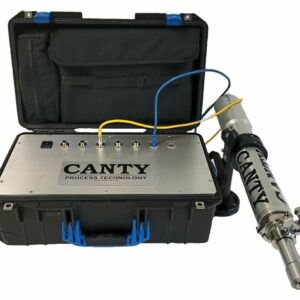
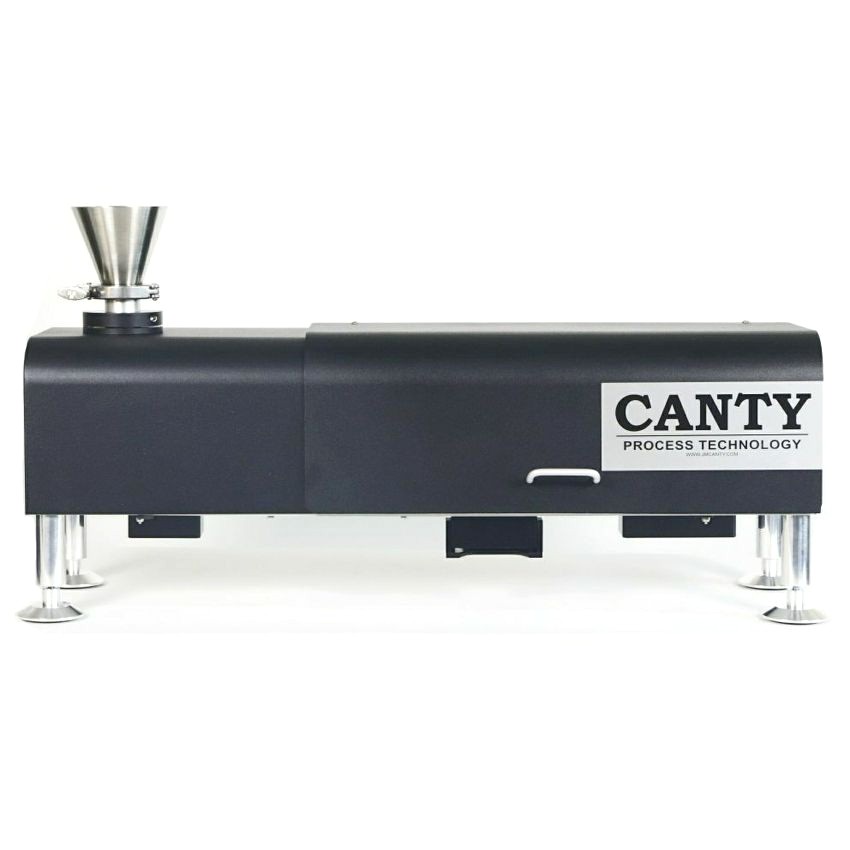
  • Particle distribution by major, minor diameter, area, perimeter
  • Correlates to sieves
  • Real time particle size analysis
  • Excel data format available

Product Inquiry

You may also like…

TOP