14-Day Returns* · 2-Year Warranty · Worldwide Shipping, US Included
14-Day Returns*
2-Year Warranty
Worldwide Shipping, US Included
However, it's also crucial to acknowledge that the non-consensual use of these methods, particularly on children, is a separate and serious issue. Research has shown that physical punishment like spanking is correlated with negative outcomes, including increased aggression and antisocial behavior in children. The adult spanking community is generally very clear that their activities are between consenting adults and are not an endorsement of corporal punishment on minors.
Peridance Center : Faculty member specializing in contemporary technique. Fitness and Personal Training
: Discipline, in the context of upbringing or relationships, often refers to the practice of making people obey rules or standards of behavior, and punishing them when they do not. The methods and philosophies behind disciplinary actions can vary significantly across different cultures and individuals.
Discipline is a challenging but essential part of parenting. While firm hand spanking and the use of belts may be effective in some situations, they also carry significant risks. By understanding the benefits and risks of these methods and considering alternative approaches, parents can make informed decisions about how to discipline their children effectively and safely. Ultimately, the goal of discipline is to teach children right from wrong and help them develop into responsible individuals. By approaching discipline with care, empathy, and understanding, parents can help their children grow and thrive.
On the other hand, belted punishment involves the use of a belt or similar object to inflict pain or discomfort on the individual being disciplined. This method is often considered more severe than firm hand spanking and has been the subject of controversy and debate.
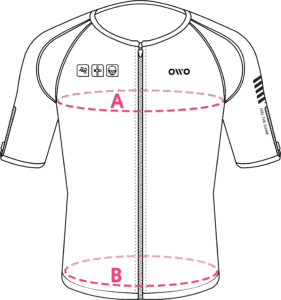
Measure your chest (A) and hips (B) following our indications.
The reference measurement will always be the larger of the two (A or B).
Look in the chart to which size corresponds to that measurement.
| Size | Reference measurements | |
|---|---|---|
| Inches | Centimeters | |
| 2XS | 25.6 – 29.4 | 65 – 74 |
| XS | 29.5 – 32.6 | 75 – 82 |
| S | 32.7 – 36.1 | 83 – 91 |
| M | 36.2 – 39.7 | 92 – 100 |
| L | 39.8 – 42.8 | 101 – 108 |
| XL | 42.9 – 46.3 | 109 – 117 |
| 2XL | 46.4 – 49.9 | 118 – 126 |
| 3XL | 50 – 53 | 127 – 134 |
| 4XL | 53.1 – 55.9 | 135 – 142 |