
FUNDED BY:

POWERED BY:

DICOM Samples
|
DICOM Library is a free online medical DICOM image or video file sharing service
for educational and scientific purposes.
|
|
STUDIES SHARED
by using Dicom Library
1
4
9
9
1
6
8
|
 |
|
By clicking Select DICOM file button You agree with our
Terms of Service
and the
Privacy Policy
ROADMAP NOTICE:
The personal account functionality will not be developed in the nearest future. Dicom Library’s team has made the decision to focus on the development of main Dicom Library features and improvement of its user experience.
DICOM Library USAGE
Select DICOM format image, video file or archived into a zip (*.zip) folder files (ZIP should contain only 1 study).
Do not upload files with information written on image!Service anonymize and only then upload files. It skips non DICOM format files. Uploaded files management is opened after successful upload - DICOM Study MANAGEMENT Panel. There you can share, download and delete files.
Watch video how to upload, view, share and download anonymized DICOM files online: DICOM files and DICOM file Tags listed in the Terms of Service will be automatically anonymized in the user's browser before uploading to the DICOM Library server. The user who uploads data is responsible for uploaded data and can upload DICOM files WITHOUT PERSONAL DATA located ON PICTURE, ON VIDEO, IN DICOM SR TEXT, IN DICOM PDF's or in any other Tags not listed as automatically anonymized (see the Terms of Service). The DICOM Library software intended for anonymization, sharing and viewing of DICOM files online complies with the requirements of the Regulation (EU) 2016/679 of the European Parliament and of the Council of 27 April 2016 on the protection of natural persons with regard to the processing of personal data and on the free movement of such data, and repealing Directive 95/46/EC (General Data Protection Regulation). Please note that:
|
News & UpdatesMedDream DICOM Viewer 8.7.0 is released! Date: 2025-06-12

The most important new features, new measurements, and improvements are described below: New features of viewing functionality:
Improved features:
News:
VIDEO of ONLINE WEBINAR: 'What’s new in MedDream v8.7.0?'. Date: 2025-07-22
Watch webinar's video recording:
Webinar was dedicated to MedDream DICOM Viewer v8.7.0 new release’s the most important features presentation and live demonstration. Agenda:
Organya22khz8bit Verified DirectRefers to the music format ( .org ) used in the game Cave Story (Doukutsu Monogatari). Modern indie games often use high-fidelity orchestral scores, but a new wave of "retro-adjacent" titles is turning back to Organya. Games like Kero Blaster (also by Pixel) and Gato Roboto utilize the 22khz8bit palette. It signals to the player: This is a game made by one person. This is honest. This is mechanical. Lowering a high-pitched sample at 22kHz can introduce "aliasing," where frequencies above half the sample rate ( 11.02511.025 organya22khz8bit The Architecture of Nostalgia: Exploring the Organya Music Format Suggested structure (ordered sections) , you may need to manually set loop points or use specific sampler plugins to make the melodic instruments sustain properly. Technical Context : The original music format developed for Cave Story The term "organya22khz8bit" is more than a technical specification or a forgotten file path. It is the signature of Daisuke "Pixel" Amaya. It proves that technological limitations are not always obstacles; sometimes, they are brushes for painting a masterpiece. In an era obsessed with 4K visuals and lossless orchestral scores, the gentle static of an 8-bit snare drum and the warm roll-off of a 22kHz melody remind us that sometimes, the most powerful art comes from the simplest machines. Refers to the music format ( The string represents a highly specific, nostalgic cornerstone of indie video game audio engineering: the specialized audio sample architecture used for percussion in Daisuke "Pixel" Amaya’s seminal 2004 game, Cave Story . Specifically, it refers to the 42 built-in drum and rhythm samples designed to run at a 22kHz sampling rate and 8-bit depth within the Organya (.org) audio engine . Organya22KHz8bit is a collection of audio samples and waveforms originally created by Japanese indie developer Daisuke "Pixel" Amaya for the music composition software It signals to the player: This is a game made by one person In a dimly lit digital workshop, alone, a Japanese developer named Daisuke “Pixel” Amaya did something most modern game creators wouldn’t dare. He built a custom audio engine from scratch. The result, a quirky format named "Organya," became the beating heart of his legendary game, Cave Story . Deep within that engine’s DNA lies a specific, almost forgotten file name: Standard CD-quality audio runs at 44.1 kHz. FM synthesis often runs higher. Organya runs at . In layman’s terms, this means the audio is being sampled or generated 22,050 times per second. DICOM Library users worldwide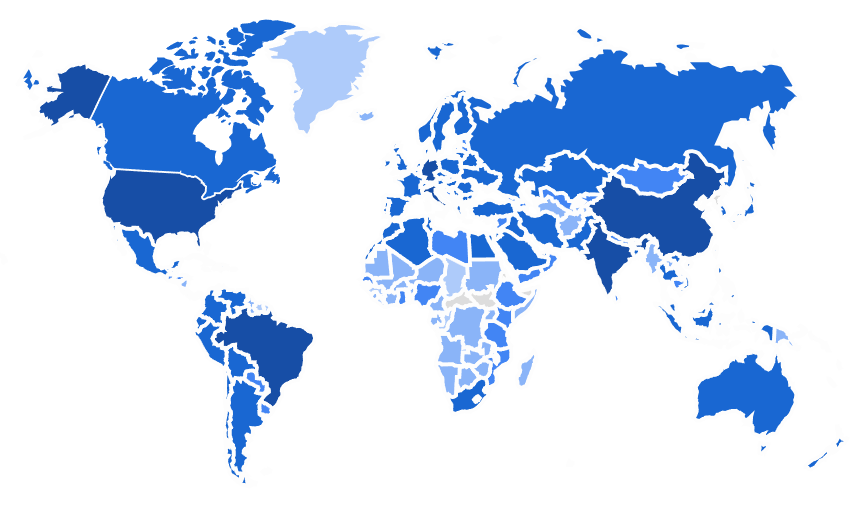
Last updated: 2025-05-29.
|
What can you upload?
You can upload DICOM file or files packed as zip.
Zip must contain DICOM files of studies, series and others.
How upload works?
Firstly test if it DICOM file or it will be skipped. Secondly try anonymize and then upload file to server. Same goes for zip file: try to extract and read file by file, test for DICOM format or skip, anonymize and upload. All extracting and anonymization is made on your browser.
Share?
You can share uploaded files via social networks: facebook, twitter and send by e-mail.
Anonymization?
At this point - deletes information about patient and attributes to identify a person in each DICOM file. Anonymization is done in your browser.
Do not upload files with information written on image!
Do not upload files with information written on image!