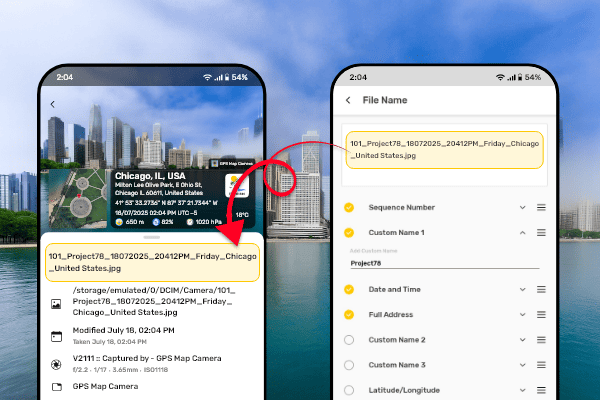
Add a text label to your work photo instantly with the GPS Map Camera.

Auto-stamp your photos & videos with accurate location, date, time, map, logo, and more. Perfect for professionals, travelers, & field teams.

Capture photos with real GPS coordinates & map overlay
Date & time stamps that can’t be edited
Add project name, notes, phone number & your brand logo
Choose automatic or manual location input for flexibility
Used by millions of real estate, construction & contractor, and remote professionals
If your enterprise requires an authorized copy of this testing protocol for auditing, engineering, or research archives, it can be obtained via recognized technical libraries and standards clearinghouses: DIN 53357 - 1982-10
, it remains a common reference in automotive and manufacturing industries for assessing how well layers or coatings stick to a substrate. Intertek Inform Core Purpose of the Standard The standard defines a methodology to measure the bond strength between layers of material, such as: Adhesion of leather dressings (dry and wet). Adhesion of textile backings on synthetic materials. Cementation/bondability of rubber to various materials. Key Testing Methods
Manufacturers use this standard to validate the performance of new adhesives or coating formulations. Where to Find the DIN 53357 PDF
Uses five specimens (15 mm wide and 250–300 mm long) taken across the material slab. eurolab.net Technical Specifics The test is often performed using a 90° peel angle (also known as the German wheel peel test). Apparatus:
: Laboratories like FILK Freiberg explicitly maintain accreditation for Method A testing parameters. Method B (German Wheel Fixture)
The test procedure involves the following steps:
The standard, titled "Prüfung von Kunststoffbahnen und -folien; Trennversuch der Schichten" (Testing of plastic sheets and films; adhesion test of layers), is a critical historical German methodology used to measure the bond strength and peel resistance of multi-layer laminates, pressure-sensitive tapes, and polymer coatings. Finding a reliable DIN 53357 PDF document requires an understanding of its historical standing, technical execution, and the modern international standards that have since replaced it. 📋 What is DIN 53357?
As an official technical document, the is copyrighted and must be purchased from accredited standards retailers. You can find the PDF at:
While the official document was technically withdrawn by the publisher, it remains a critically important benchmark in industrial quality control, material engineering, and product manufacturing. Finding a authentic or navigating its modern equivalents is vital for engineers seeking to maintain consistency across technical data sheets and legacy compliance frameworks. Overview of DIN 53357 DIN 53357 Test | Thwing-Albert
To achieve consistent results in accordance with DIN 53357, laboratories utilize specific instrumentation and environmental controls:
Note: Always ensure you are accessing the most current version of the standard to meet compliance requirements.
for testing the tensile strength of plastic films? Share public link
DIN 53357 is a historical German standard. It establishes methods for testing plastic films. It specifically focuses on adhesion behavior. It evaluates how well layers bond together.
The primary version is 1982-10, though users should check for current, updated, or withdrawn status within specific testing labs. Importance of DIN 53357 in Manufacturing
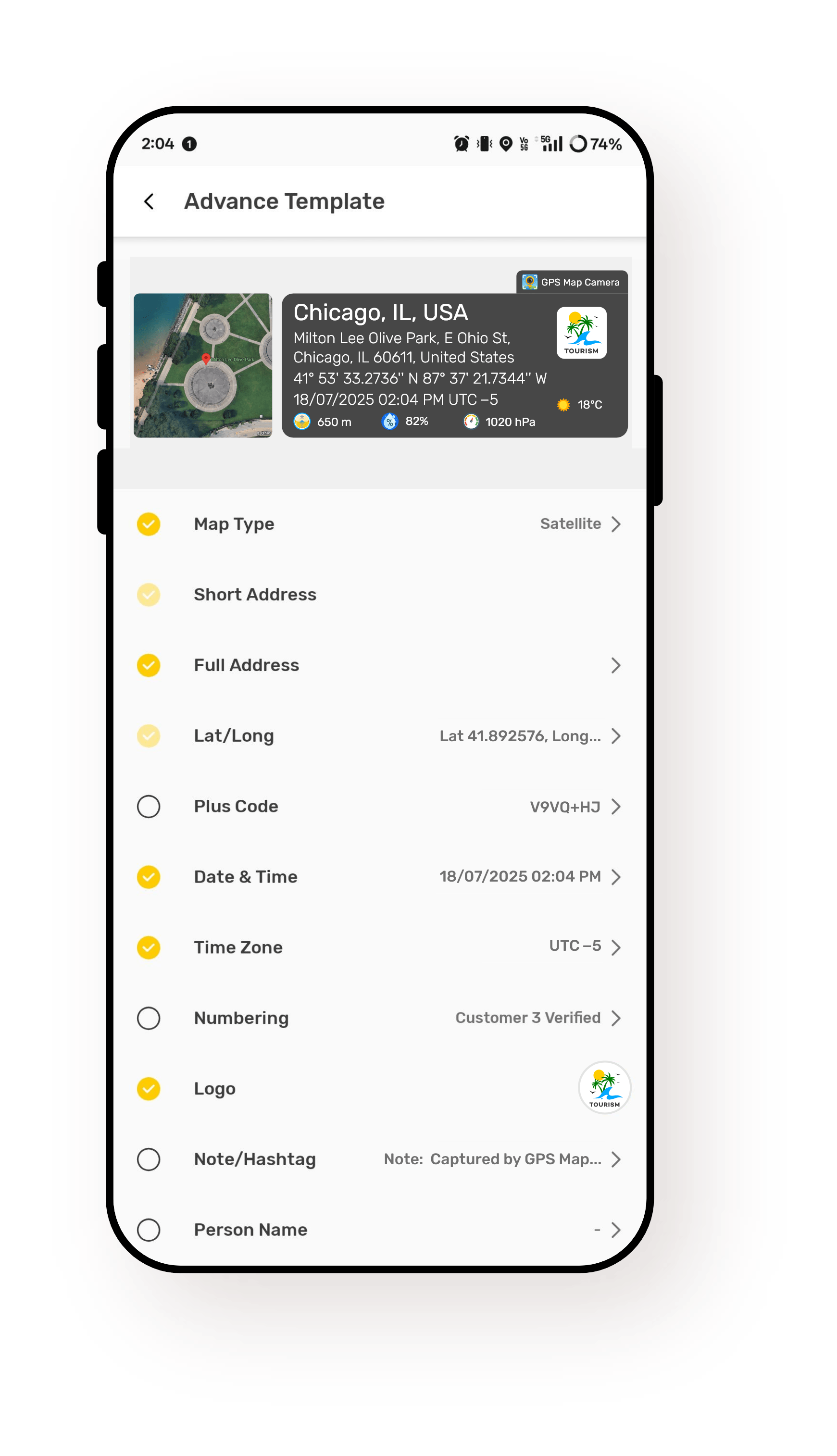

GPS Map Camera gives you full control to create photo documentation that’s authentic, accurate, and impossible to fake. Whether you’re on a site, in the field, or documenting memories, every image becomes verifiable proof
Explore All FeaturesGPS Map Camera automatically names your photos using the location, date, and time from the stamp — no manual work needed. Perfect for professionals who need clean, organized files ready for reports, sharing, or recordkeeping.
No manual renaming
Clean and easy-to-search images
Consistent formatting for reporting or sharing
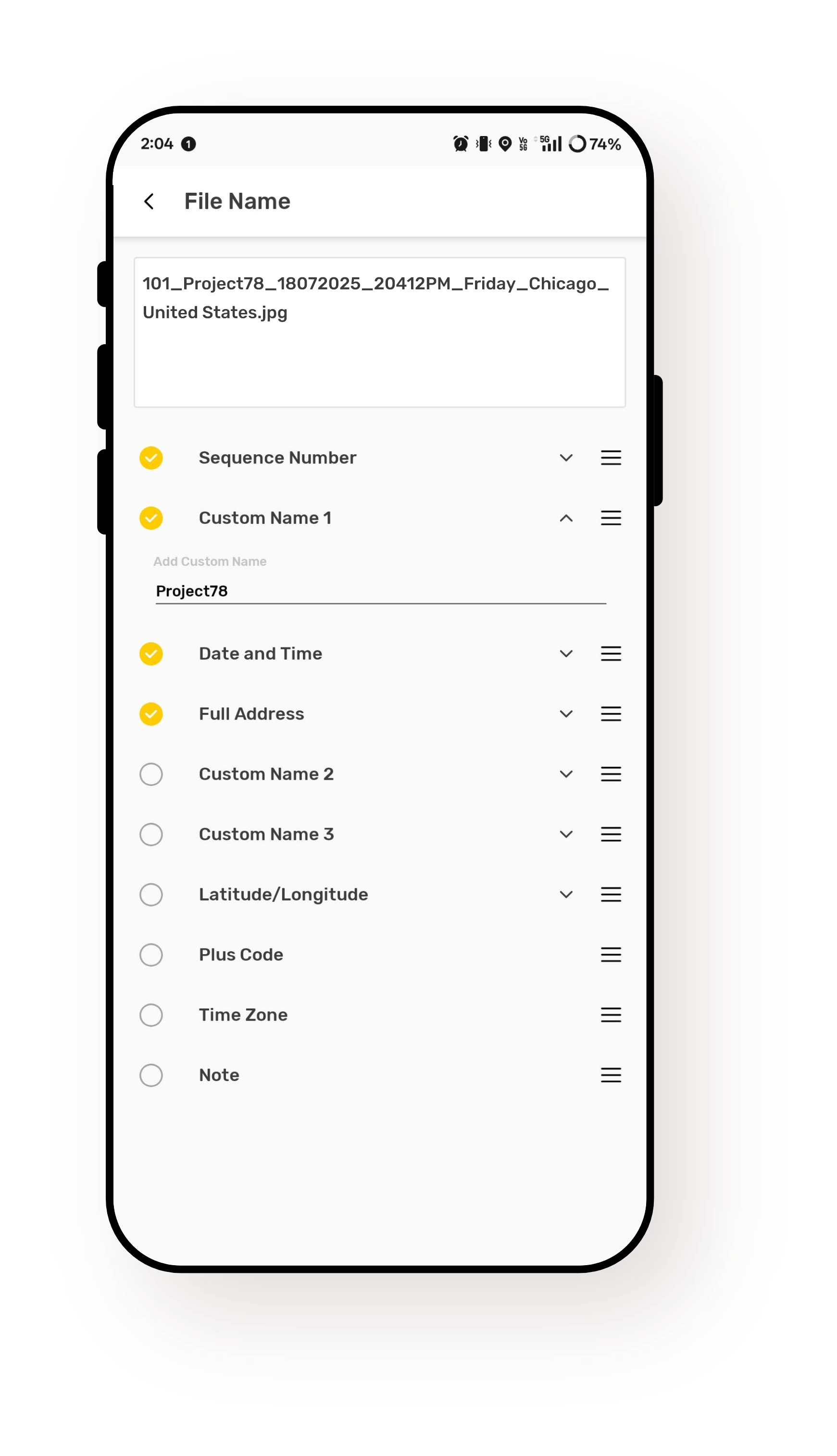

See how GPS Map Camera’s powerful interface makes your images more than just pictures—each one is an authentic, accurate snapshot with automatic stamps.

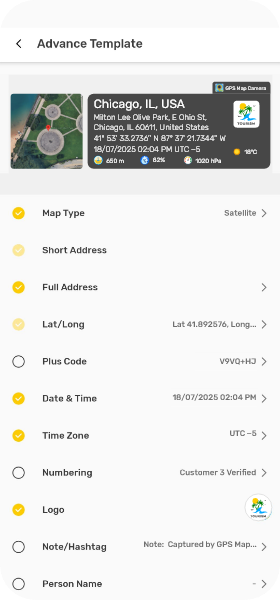
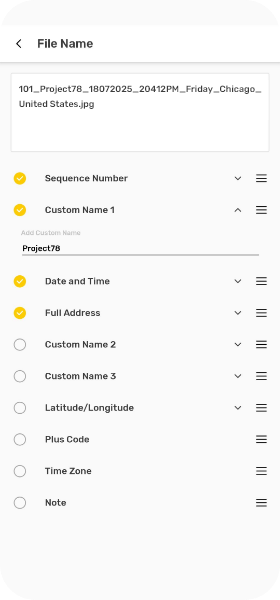



We believe in transparency. Here are answers to the questions our users ask most.

Explore how people across industries use our app to get accurate, authentic photo documentation.
Super helpful for logging my location and time while working off-site. Plus the file naming is a lifesaver!

I love how my photos show exactly where and when they were taken. It makes my posts more real — and my memories more organized.

Clients trust me more when I send geo-stamped images. It’s added professionalism to my entire work process.

Exactly what I needed! Now every project photo I take includes GPS, time, and location. It’s become a daily part of my workflow.

If your enterprise requires an authorized copy of this testing protocol for auditing, engineering, or research archives, it can be obtained via recognized technical libraries and standards clearinghouses: DIN 53357 - 1982-10
, it remains a common reference in automotive and manufacturing industries for assessing how well layers or coatings stick to a substrate. Intertek Inform Core Purpose of the Standard The standard defines a methodology to measure the bond strength between layers of material, such as: Adhesion of leather dressings (dry and wet). Adhesion of textile backings on synthetic materials. Cementation/bondability of rubber to various materials. Key Testing Methods
Manufacturers use this standard to validate the performance of new adhesives or coating formulations. Where to Find the DIN 53357 PDF
Uses five specimens (15 mm wide and 250–300 mm long) taken across the material slab. eurolab.net Technical Specifics The test is often performed using a 90° peel angle (also known as the German wheel peel test). Apparatus: din 53357 pdf
: Laboratories like FILK Freiberg explicitly maintain accreditation for Method A testing parameters. Method B (German Wheel Fixture)
The test procedure involves the following steps:
The standard, titled "Prüfung von Kunststoffbahnen und -folien; Trennversuch der Schichten" (Testing of plastic sheets and films; adhesion test of layers), is a critical historical German methodology used to measure the bond strength and peel resistance of multi-layer laminates, pressure-sensitive tapes, and polymer coatings. Finding a reliable DIN 53357 PDF document requires an understanding of its historical standing, technical execution, and the modern international standards that have since replaced it. 📋 What is DIN 53357? If your enterprise requires an authorized copy of
As an official technical document, the is copyrighted and must be purchased from accredited standards retailers. You can find the PDF at:
While the official document was technically withdrawn by the publisher, it remains a critically important benchmark in industrial quality control, material engineering, and product manufacturing. Finding a authentic or navigating its modern equivalents is vital for engineers seeking to maintain consistency across technical data sheets and legacy compliance frameworks. Overview of DIN 53357 DIN 53357 Test | Thwing-Albert
To achieve consistent results in accordance with DIN 53357, laboratories utilize specific instrumentation and environmental controls: Cementation/bondability of rubber to various materials
Note: Always ensure you are accessing the most current version of the standard to meet compliance requirements.
for testing the tensile strength of plastic films? Share public link
DIN 53357 is a historical German standard. It establishes methods for testing plastic films. It specifically focuses on adhesion behavior. It evaluates how well layers bond together.
The primary version is 1982-10, though users should check for current, updated, or withdrawn status within specific testing labs. Importance of DIN 53357 in Manufacturing